Blog · Restoration · · Updated
Saab 96: Freeing a seized rear brake drum
The right rear wheel of my Saab 96 wouldn't turn after decades of standing. How I freed the rusted brake drum – and what to keep in mind if you have the same problem.
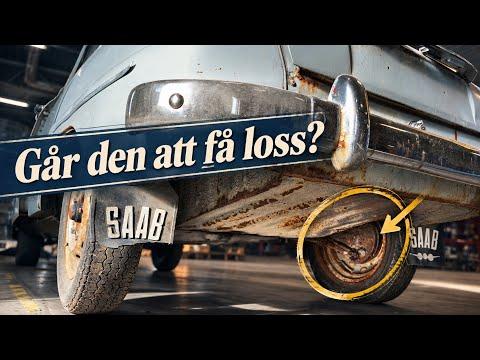
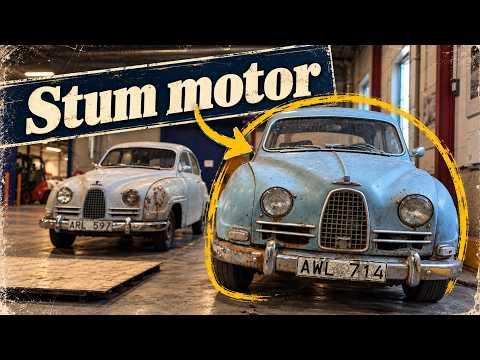
I bought two old Saab 96s that were delivered to Jönköping. One rolls, the other doesn’t – the right rear wheel of the grey ARL 597 won’t move at all. The brake drum has rusted solid.
Before the cars could be moved from the transport terminal to my warehouse, that drum had to come free. I filmed the whole job. There’s hardly any talking in the video, just workshop sounds.
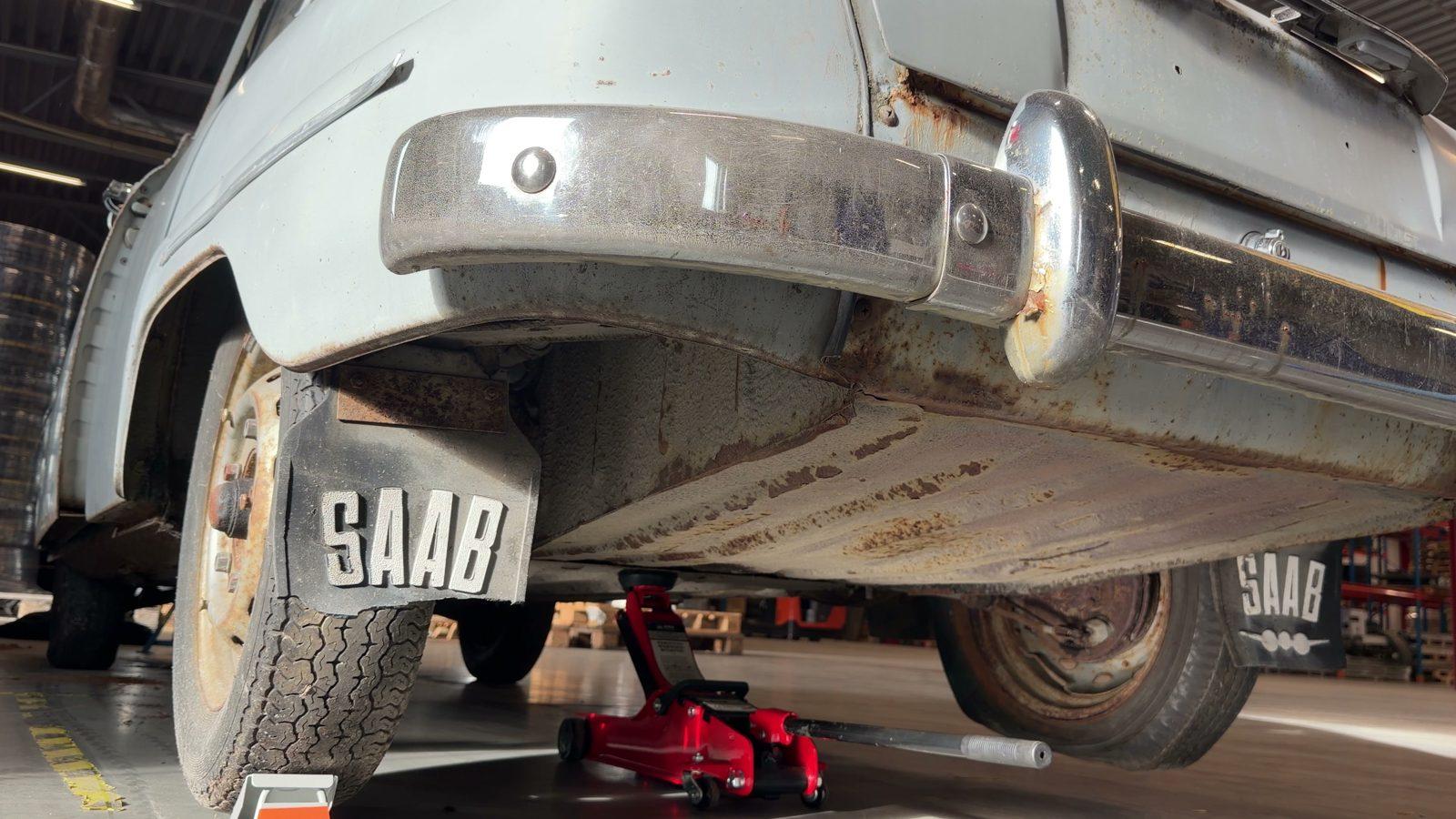
Rear end up on the jack – then onto an axle stand before the wheel comes off.
The problem: the right rear is stuck like it’s welded
The car has been parked since 1982. The seller said it rolled freely last winter, but judging by how the drum was stuck, I think it had been seized for a lot longer.
The Saab 96 has drum brakes at the rear. The wheel cylinder sits at the top of the brake and pushes the shoes outwards, left and right, against the inside of the drum. When a car stands for decades, the shoes and drum rust together – and nothing moves.
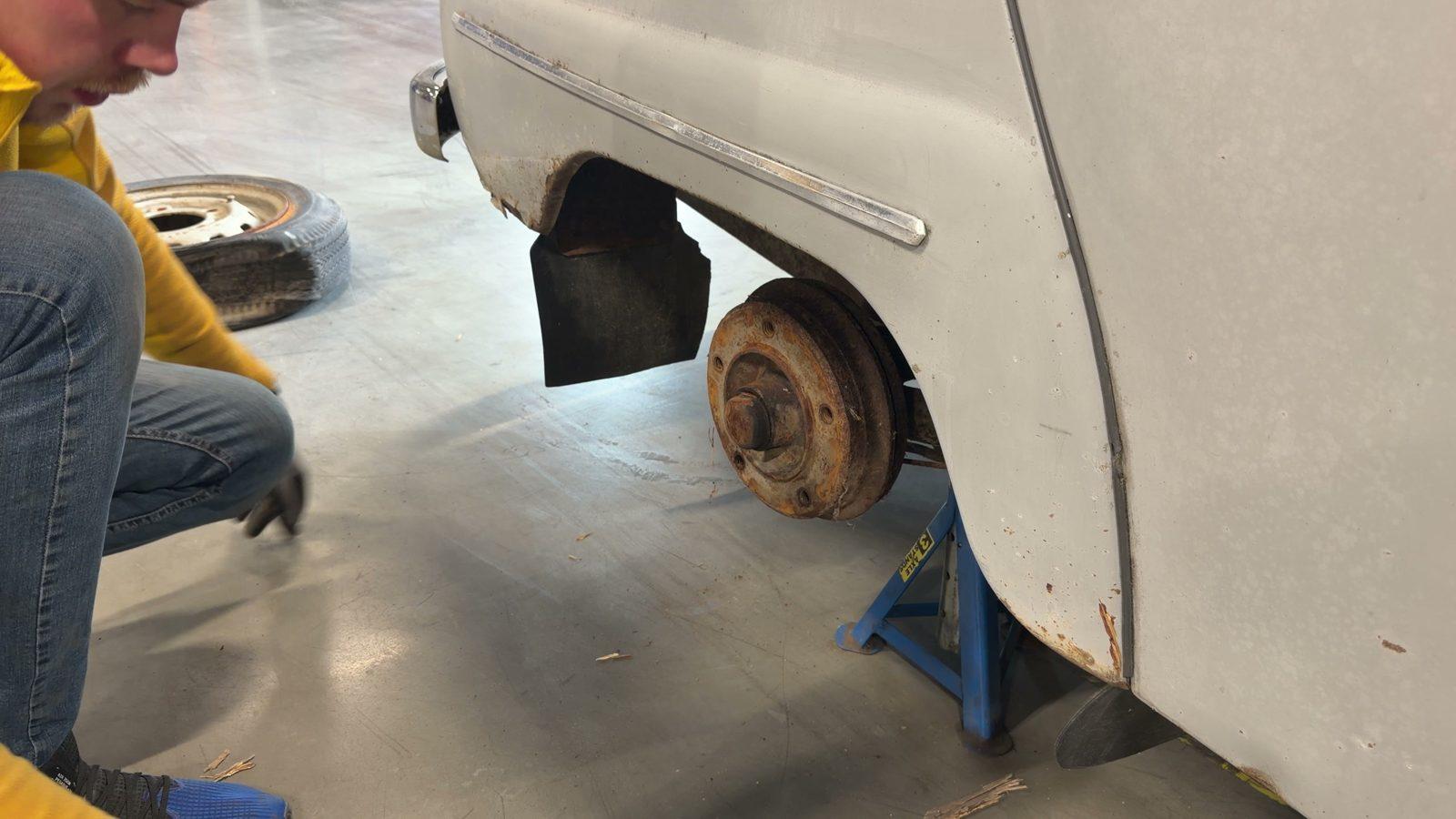
Wheel off. The drum stays put – and refuses to move.
How I freed it
- Loosen the wheel nuts while the wheel is still on the ground.
- Lift the car with a jack and put it on an axle stand.
- Wheel off. The drum is stuck.
- The hammering begins. Blow after blow around the drum. It takes time.
- The drum starts to give about halfway through the video (7:31).
- Round two – rotate, hammer, rotate again until it turns a full revolution.
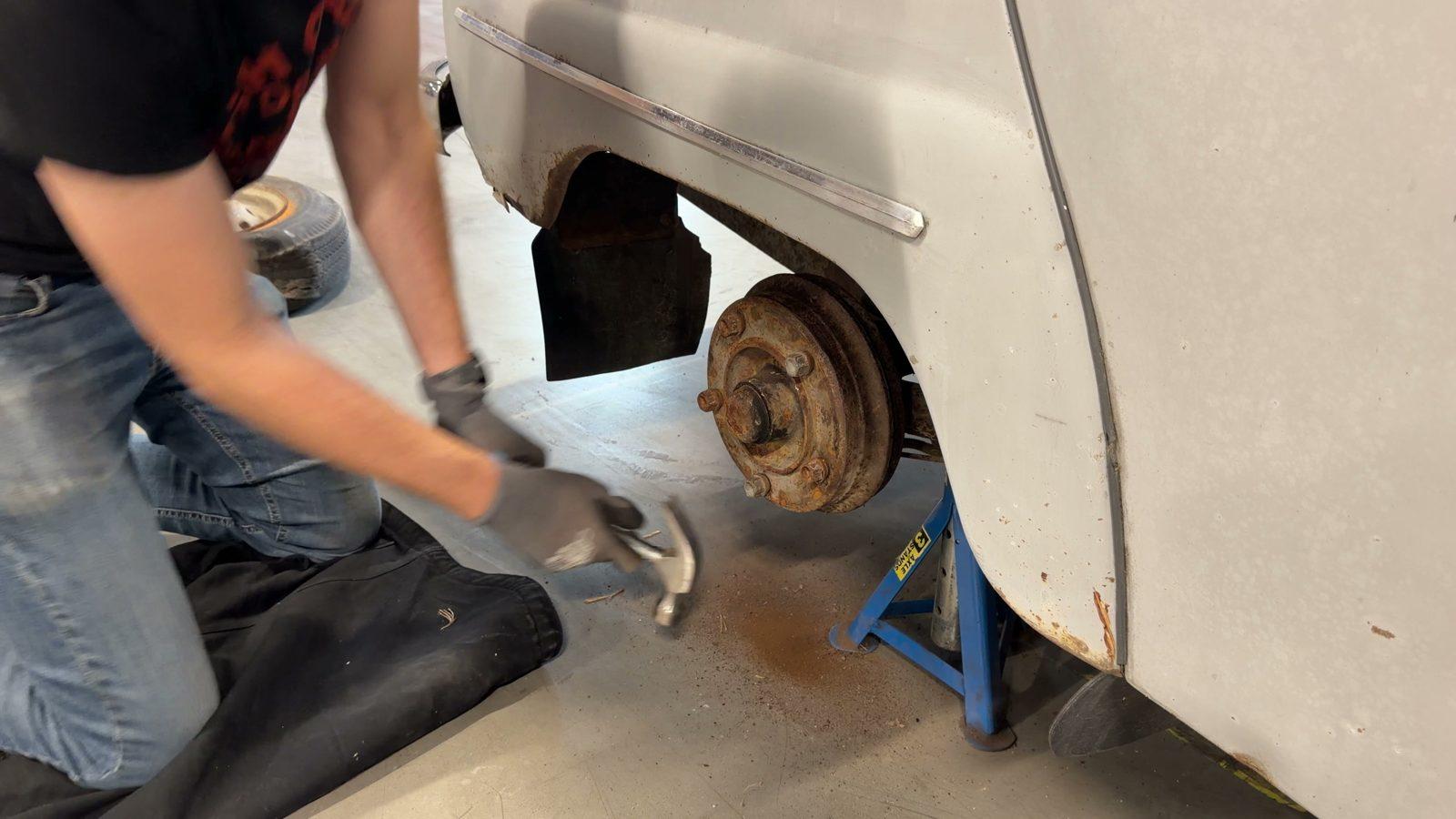
It takes a lot of hammering.
Some drums have holes that let you reach in and release the shoes. This drum didn’t have those holes, so the shoes had to be forced free.
Talking brakes
Halfway through there’s a short chat about why it still drags. It feels like there’s a band – a point somewhere up by the wheel cylinder where the brake catches as the wheel rotates. Once it lets go it turns, and then it catches again when it comes back round to the same spot.
The wheel turns!
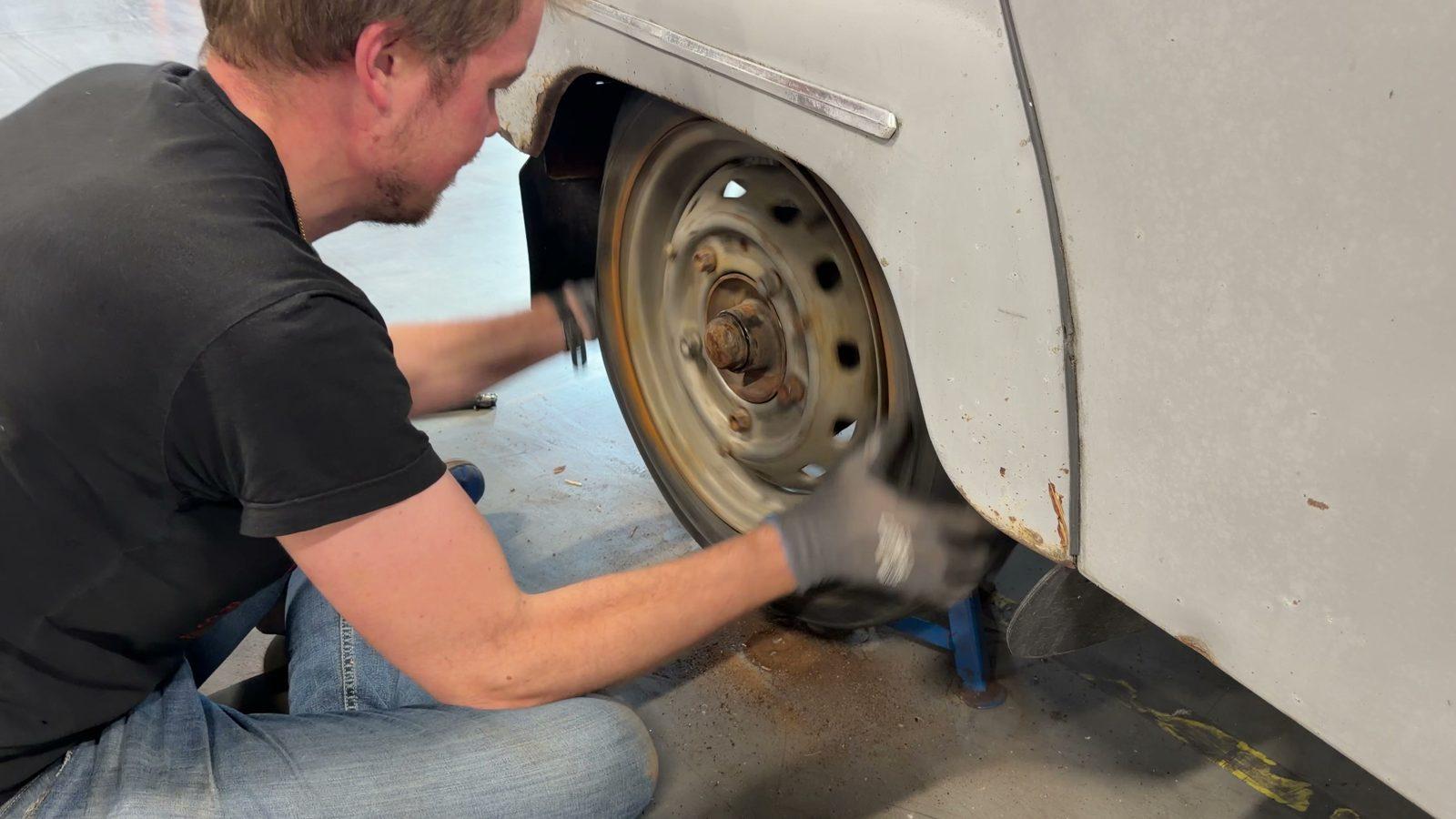
The wheel turns – heavily, but it turns.
The wheel turns, but it’s heavy and there’s still a point where it drags. I didn’t feel finished, so there was more rotating and working. Finally I swapped to another wheel that was a bit better – the old one had a slow puncture.
Tips if you have the same problem
- Safety first. Never work under a car that’s only on a jack – use axle stands.
- Release the handbrake and back off the adjuster if your model has one.
- Penetrating oil and patience. Let it soak, and tap evenly around the edge of the drum rather than hitting one spot hard.
- Protect the drum. A wooden block or rubber mallet reduces the risk of cracking or distorting it.
- Expect a brake overhaul. A turning wheel means the car can be moved, not that the brake is ready for the road.
What happens next?
With the rear wheel sorted, the cars can be moved from the transport terminal to my warehouse. In the next episode I tell you more about both cars – read about buying two Saab 96s unseen.
Video chapters
- 0:00 Intro – two Saab 96s
- 1:53 Loosening the wheel nuts
- 2:43 Wheel off – the drum is stuck
- 3:10 The hammering begins
- 7:31 The drum starts to give
- 10:47 Round two
- 12:26 Talking brakes
- 14:52 The wheel turns!
- 16:46 Fitting the better wheel
- 18:20 Outro
The video has English subtitles, as well as Swedish, Finnish, German, Dutch, Norwegian, Danish and French.
Frequently asked questions
Why does a brake drum seize?
When a car stands for a long time, rust forms between the brake shoe linings and the inside of the drum, and in the hub where the drum sits. Moisture and time effectively glue the shoes to the drum, so the wheel won't rotate.
How do you free a seized brake drum?
The usual approach is to release the handbrake, back off the brake adjuster if possible, let penetrating oil soak and then tap evenly around the edge of the drum with a hammer – ideally with a wooden block or mallet in between so the drum isn't damaged. Be patient. In my case it took a long time of hammering before it started to give.
Is it safe to work under the car with just a jack?
No. Always put the car on axle stands on firm ground before getting under it or working with the wheel off. The jack is only for lifting.
Do the brakes need overhauling once the drum is free?
Usually, yes. A brake that has seized often has worn or contaminated linings, sticky wheel cylinders and dry hoses. A turning wheel means the car can be moved – not that the brake is roadworthy.